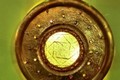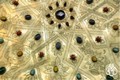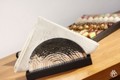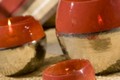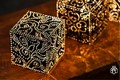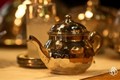


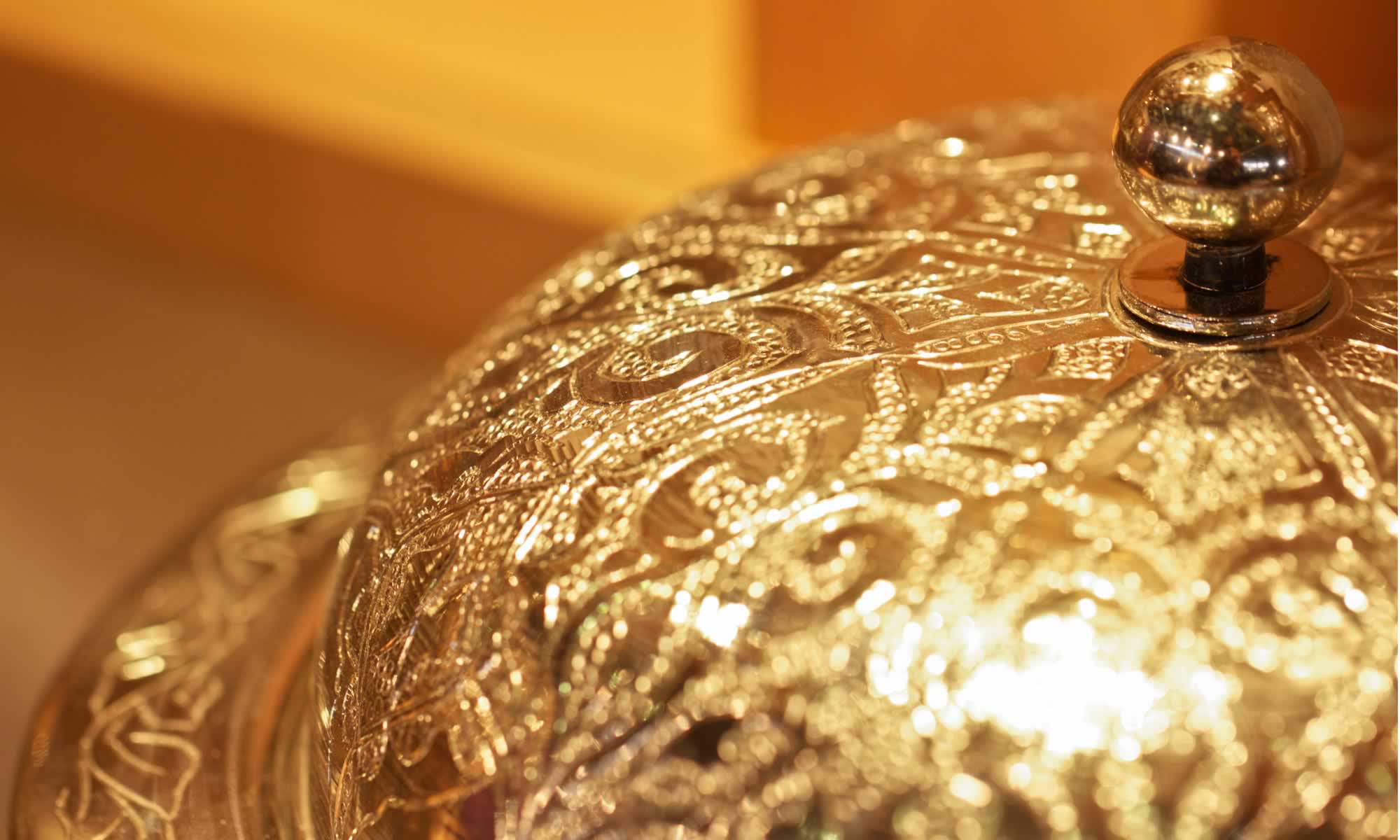
 Wrought iron, white copper, enameled, metals are the kings in making trinkets and utility objects : vases, trays, teapots, kettles, pots, candy dishes, lamps, braziers …Traditional techniques have exceeded the functional requirements to transform itself into artistic expression.
Copper
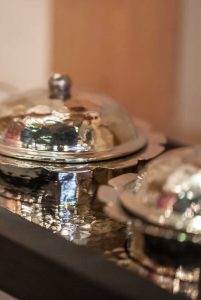
Copper is the metal which the handicraft uses the most. It was in the 18th century that copper crafts knew its golden age in Tunisia, particularly in large cities (Tunis, Sfax, Kairouan). Copper objects were an important part of a bride’s trousseau in urban families until the mid-twentieth century. Today, chasing is generalized and embellished with inlaid silver wire, especially for the brass plates. Red copper pots keeping visible the traces of hammering, and which are used as pot holders.
Just as ceramics, vases with the most varied forms such as braziers, candy boxes and flower vases are covered with a vitreous enamel in warm colors like green, purple and honey, which lets show through a schematized floral decor. Very fashionable, enameled copper which is adorned with all colors and embellished with various motifs.
 Wrought iron
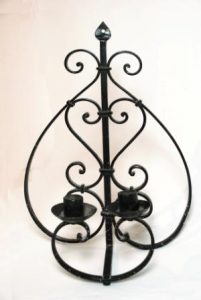
As with other crafts, this technique exceeds the functional requirements to become a means of artistic expression.
Tunisian ironworkers, whose competence is highly recognized, have always reacted very far to external influences. But it is up to Andalusian that we attribute the graceful forms made up of curves and spirals (Zlabiya) and studded doors decoration which become characteristic of Tunisian wrought iron.
Nowadays, commercial or decorative wrought iron objects have adapted to market trends. A happy marriage of materials (wood and wrought iron, blown glass and wrought iron) offers local and tourist customers a varied range of products. Indeed, young designers innovate and impose a proper Tunisian style that appeals to the international market.