


Pottery
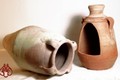
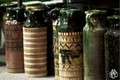
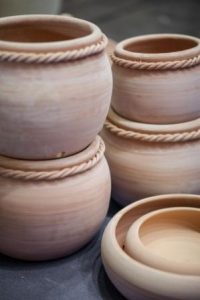
The art of pottery and ceramic has a history dating back for thousands of years in Tunisia, which has two types of pottery: A pottery turned by men and another modeled by women: the latter occurs only in rural areas; It is essentially utilitarian. Modeling, baking and decoration of this pottery remained primitive. Lines, points, lines ciliates, sawtooth, crosses, diamonds are some of the designs that remind tattoos and rural wool fabrics.
As for the turned pottery, it seems that it is potters of Djerba who were the first to use the tower since the earliest times. They hold their refinement of this art of ancient Egypt, Phoenicia, Greece and Rome.
It was also Gualala (Djerba) potters who were at the origin of the creation of other pottery centers in the Tunisian coast. Tunis, Nabeul, Moknine are indebted to them for having given rise to a production similar to that of Djerba.
But if the porous pottery “chaouat” is identified with Guellala, the enamelled, yellow, green or brown pottery is synonymous with Nabeul.
Ceramic
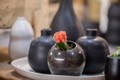
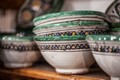
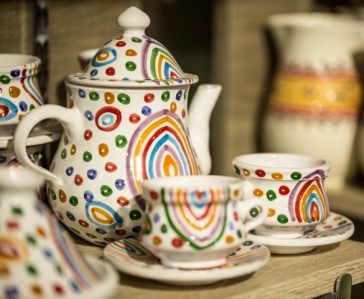
Starting from the 17th century, the Tunisian ceramics strongly undergoes Turkish influence:
potters of Tunis, installed at Qallaline, produce a polychrome ceramic reminiscent of Ottmane Turkey.
Mosaic
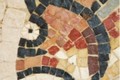
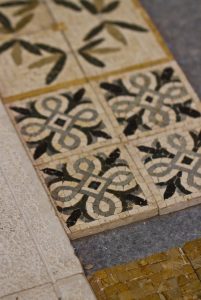
Tunisia has the richest collection of ancient mosaics in the world. It was during the Roman era and especially from the second century that this art has developed to the point that one can speak of a true African school characterized by a mastery of figurative representation and a rich and refined palette.
Today, it is possible to obtain reproductions of ancient mosaics which skilled craftsmen are striving to reduce and modernize for decorative purposes.
Chipped stone
widely used in Tunisian architecture, carved limestone, beige or pink color called “khadal”, comes from Dar Shaaban (Nabeul). It used to make bows, doorways and windows, and even marquees such as may be seen in several houses of the medinas of Tunis.